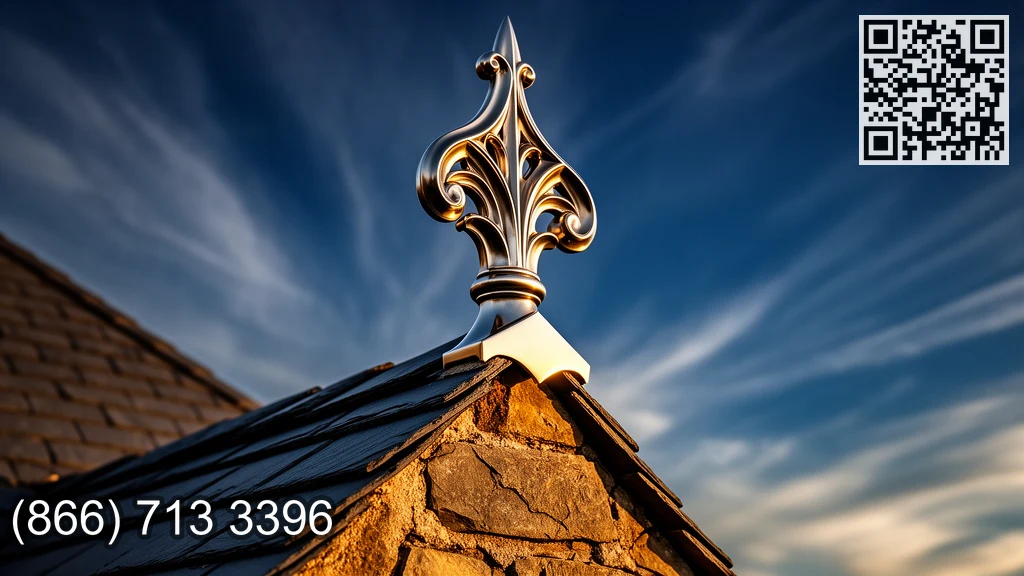
A roofline without a finial can seem like a sentence without punctuation. Your house might be handsome, well described, even perfectly proportioned, yet something regarding the shape lacks willpower. A customized finial deals that last note, the thrive that informs you somebody considered the structure from a distance in addition to up close. When the type makes use of historical patterns, it comes to be more than ornament. It becomes a conversation across centuries, equated into steel and shadow.
I have watched clients drop silent the very first time they see their residence from the lane after a finial increases. It is a small element by square video footage, a rounding mistake in a lot of project budgets, however it carries authority far beyond its dimension. The secret lies in percentage, memory, and craft. Obtain those 3 right, and a finial comes to be the focal point that connects a roofscape together.
How practice shows the eye
Historic finials weren't produced in a vacuum. Medieval apexes bristled with crockets and fleur-de-lis, both symbolic and sensible, shedding water and damaging wind. Georgian condominiums preferred obelisks and spear points that echoed timeless urns and balusters. Victorian builders went exuberant with pierced crowns, onions, and fire motifs in pressed copper and cast iron. Also humble farmhouses in New England grabbed lightning rod finials topped with glass balls or acorn tips, a mix of rustic sense and quiet pride.
Study sufficient of these patterns and you see the geometry repeat, repositioned like notes in songs. A common series runs from a stout base to a shaft, after that a pile of decreasing elements, then a point: base, neck, stubborn belly, neck, factor. Where the tummy sits about the complete height signals the style. Gothic profiles keep the mass reduced, with a fast taper, while timeless finials linger in the center with a fuller belly prior to tightening. Victorian versions add an additional rhythm with punctured bands and riveted appliqués, tightening up the visual cadence.
When we develop at Salvo Metal Works, we usually begin by mapping out those series without decor. You can hear the building's language in this manner. A Tile Style home with sweeping roofing system aircrafts wants a slower taper and a rounded midsection. A French Diverse roofing system with double pitches prefers an extended neck and a crisp spear. Tudor gables approve a little play in the base, maybe a faceted plinth that mirrors half-timber geometry. We could bring 3 or 4 thumbnail silhouettes to a website meeting, after that hold them versus the horizon and allow the house answer back.
Selecting a language for a certain roof
Every finial choice starts with massing. Stand on the road and look at just how the roofing system collects: is it a solitary gable, a collection of hips, a steep pyramidal tower? A low-slung farmhouse with a 7-in-12 pitch takes a various finial than a turret climbing to 16-in-12. Put a heavy, onioned Victorian account on the farmhouse and it really feels theatrical. Provide the turret a little spire and it appears underdressed, like a tuxedo without a bow tie.
The product palette need to do the same. Copper stays the recommendation criterion for household finials, partly for its durability, partly for the means its aging writes time into the surface. A bright new copper finial brings a congratulatory shimmer, then within months it softens to umber and, in maritime environments, heads toward a trendy environment-friendly over 5 to fifteen years. Zinc is subtler, settling right into a blue gray that suits Belgian or minimal analyses. Painted light weight aluminum, correctly fabricated with sealed joints, earns its keep where weight or spending plan are vital, particularly on long ridges or fragile cupolas. Lead-coated copper provides you a sensible, pewter-like tone from day one, a selection we commonly make on slate https://telegra.ph/Salvo-Metal-Works-Artisanal-Steel-Craft-for-Historic-Home-Renovations-05-07 roofings where the quiet, creamy grey really feels right.
The finest tasks look past the finial itself. Roof vents, leader boxes, and smokeshaft caps either sustain the focal point or take on it. If you intend to include Personalized Roof Vents or Customized Leader Boxes, coordinate profiles. Repeat a bead line from the finial base on the leader box lid. Mirror the finial's faceting in a dormer pediment. Salvo Metal Works turns out families of information this way so the roofscape reviews as one thought, not a set of one-off purchases. You see it most clearly on properties with personalized cupolas or Personalized Dormers, where the finial can crown the cupola while the dormers carry the exact same language in smaller sized, quieter forms.
Proportion, that quiet master
Numbers assist convert preference into choices. While there is no single policy, a set of useful proportions keeps you out of trouble. For a primary gable peak, we typically target a finial height between 2 and 3 percent of the horizontal frontage width. On a 60 foot front, that suggests a finial in between 14 and 22 inches above its base plinth. A turret or cupola can take more because the vertical hint is stronger, so 3 to 5 percent of the tower elevation from eave to cap looks balanced. If the roof pitch is steep, the finial can grow slightly taller without showing up aggressive, because the eye reads it versus a dynamic diagonal. If the roofline consists of multiple heights, in some cases 2 smaller sized finials harmonize much better than one huge one, especially when your home presents greater than one main elevation.
Diameter matters as long as height. A finial that is classy in elevation can really feel thrifty in the round. Where the finial meets its base, we like to see a size that amounts to roughly a quarter of the elevation for classic forms, much less for gothic spires. The tummy, if present, could swell to 1.2 to 1.4 times that base size. The point tapers swiftly near the leading so it reads as a crisp termination from the ground.

Edge detail will certainly transform whatever. A half-inch hem along a copper band reviews nearly unnoticeable at thirty feet, but the darkness line it creates makes the band appearance deliberate and significant. The same is true of a tiny kick at the base, that last 5 levels of flare that takes a form from generic to intentional. This is where Custom Finials gain their keep. Stock pieces often flatten these transfer to conserve actions. With custom-made work, we can construct the shadow language right into the item, and those darkness remain long after the new luster fades.
Structural feeling behind the romance
A finial must endure wind and periods. Nothing drains pipes the verse much faster than a slanted point after the initial storm. The undetected core is the spinal column of the system. We generally develop around a stainless-steel or galvanized steel mast, secured with a base plate bolted to obstructing beneath the roof sheathing. On stonework towers, the mast installs in a grouted sleeve. The finial shell, whether copper or zinc, then sleeves over the pole, allowing for thermal movement without rattles. Rivets, concealed screws, and soft solder or TIG welds safeguard the skin.
Wind loads vary by direct exposure, but any website within a seaside area requires a greater safety and security variable. It is not unusual to specify pole sizes of 1 inch solid for tool finials, 1.5 inches for taller apexes, with gusseted base plates and added framing in the roofing system. On high, slim factors we hide stiffening rings inside the copper at key changes, so the type withstands ovalizing in gusts. These information transform a finial from jewelry into architecture.
One a lot more architectural note, frequently missed out on: water administration. Also a tiny pinhole near a solder seam will drink water during wind-driven rainfall. We develop inner drip paths, repetitive laps, and in some cases a surprise liner cone to guide any subordinate water back to daytime. If the finial rests over a cupola or aerated ridge, the path must not block air movement. When tying into Custom Smokeshaft Shrouds, we form the base flashing so meltwater and stormwater skirt around the finial base without ponding against vertical seams where freeze-thaw cycles can pry.
Pattern collections, then and now
Historic pattern books stay an abundant resource. Gibbs and Palladio offer ideas for classical containers and shafts. 19th century American brochures show a democratic range of iron finials that when covered carriage houses and garden structures by the thousands. I keep a dog-eared copy of an 1893 copperworks sheet that outlines twenty finials with gentle names like Lily, Pineapple, and Fire. The Pineapple, long a sign of welcome, rests wonderfully on coastal homes, especially when coupled with a copper or lead-coated cupola. The Fire motif suits French roofs, yet the flare should be managed to stay clear of looking cartoonish.
We hardly ever replicate a historic pattern outright. Instead we treat guides as a vocabulary. You might take the reduced two thirds of a Georgian container, after that cap it with a slimmer gothic apex, removing the scrollwork to match a cleaner modern sensibility. Or you keep the Victorian onion yet eliminate the punctured crown and reduced the rivet count in fifty percent, allowing the layering come from seam lines instead of appliqué. The result seems like it comes from a lineage without pretending to be a museum piece.
The right kind of restraint pays off in combined neighborhoods. A residence from the 1990s can bring a quiet historic referral without appearing like a phase set. A little acorn or ball-and-spike, properly proportioned, provides the roof covering a finished punctuation that next-door neighbors identify as "best," also if they might not call the design. That recognition is pattern memory at work.
Material alchemy: how steels age and why it matters
Anyone who has watched copper travel from new-penny pink to delicious chocolate to verdigris discovers persistence. Climate creates the schedule. In hill areas, you may wait decades for complete environment-friendly. In moist seaside towns the green can grow in 5 or six years. Salt and contamination press the palette toward darker, more intricate eco-friendlies and blacks. This aging is not just rather. It is a protective skin that self-heals tiny scratches.
Brass finials are rarer on roofs, but they show up in garden settings and on conservatories. They relay a warmer gleam than copper and hold their gold notes much longer prior to dulling. Left all-natural, brass favors brown and black rather than eco-friendly. Bronze does a similar point with a much deeper, redder base.
Painted metals open the door to monochrome restraint. A matte black aluminum finial on a charcoal slate roofing nearly vanishes in extreme light, just to reveal its account in morning and evening. Engineers who favor darkness over luster commonly go this course, specifically when the roofline already lugs other devices like Personalized Snow Guards, ridges, and venting details.
We occasionally intermix: a lead-coated copper base and reduced body with a pure copper tip. 10 years on, you get a suppressed graphite body crowned with a touch of green, an innovative power structure that reviews as intent instead of accident. When allied with Customized Roof covering Vents and a set of aligned smokeshaft caps, the result is of a well managed roof, a horizon that rewards a second look.
From illustration to website: the making of a custom-made finial
Good finials begin with paper, then cardboard, after that steel. After the early silhouettes are chosen, we simulated up at the very least the lower third at full dimension in board. Even knowledgeable clients take too lightly just how scale acts when lifted to roof height. A base that felt sufficient on the workbench can go spindly at forty feet. The cardboard mockup remains on a sawhorse up on scaffolding or a lift, and we go back with binoculars, noting with a pen where the belly need to swell or the neck ought to slim.
Once we agree on geometry, we design the piece in a light electronic atmosphere to compute growths for sheet cutting. Complicated curves end up being gores, outlined so the joints climb where the rainfall wants to fall. We choose joint kinds based upon direct exposure and appearance. A long mechanical joint can look heavy at small scales but delivers toughness in wind. Soft-soldered lap joints are neater for official profiles and, if created properly, flawlessly noise. Where 2 contours fulfill, we mitre joints to prevent buildup.
Fabrication brings its own set of judgments. Copper, as an example, work-hardens. Over-hammering a gore to close a small mismatch may take the spring out of the panel and publish a line across the face. We anneal when required, a step some shops miss to save time, but vital when the profile asks for elegant changes without any apartments on meant rounds. Rivets and joints line up with an eye to balance that the laid-back customer feels even if they can not point to it.
The last act is setup, a choreography in between the finial, the roofing, and the sky. Forecast issues. Soldering in an onshore breeze at 40 degrees, with surprise drizzle, is not a mid-day for brave joints. We prepare the work to make sure that base blinking marries right into the roof covering on a completely dry day, then the mast establishes plumb, after that the finial slides over, with final joints shut promptly and easily. Crews bring soft straps to avoid scarring brand-new steel, and every device bag gets a microfibre cloth. A spot on brand-new copper checks out like a shout.
Integrating the family: finials with chimneys, cupolas, and dormers
Great roofscapes occur when a house owner assumes in sets. A finial can set the keynote, yet sustaining items play the melody. Custom-made Chimney Shrouds tame down-drafts and cap off masonry with function, while their banding and edge details resemble the finial's base. On homes with multiple flues, we frequently differ the chimney cap heights subtly, reserving the tallest for the key fireplace, after that tipping down, a peaceful counterpoint to the finial's vertical claim.
Cupolas, whether aerating or decorative, naturally invite a finial. The critical call is scale. A cupola finial must value the cupola body greater than the main house. If the finial is too tall, it resembles it is impersonating a lighthouse. We maintain the cupola finial at concerning a third to a half the height of the main-peak finial, and we let the cupola body lug more of the information. Louver blades, panel structures, and edge pilasters on personalized cupolas pick up the very same seam language we make use of on the finial so the pair reviews as kin.
Dormers need diplomacy. Custom Dormers can conveniently crowd a top if they lug overlarge pediments or over-eager rake accessories. A controlled finial provides dormers room to take a breath. If a client wants a bolder finial at the major gable, we cut dormer expression to flatter, with thinner housings and easier cheeks. Alternatively, on a long run of equal dormers, a small series of modest ridge spikes, each a 3rd the dimension of the main finial, can sew the roofline together without fuss.
Leader boxes and roof covering vents, the peaceful workhorses, are worthy of the very same orchestration. Personalized Leader Boxes with beveled covers and a hem echoing the finial base make the downspout shift checked out clever rather than simply practical. Customized Roof covering Vents with louver ribs that line up with dormer slats placed a refined order into the field. When the snow comes, Customized Snow Guards, set on thoughtful training courses, maintain avalanches off entrance strolls and, in copper, age right along with the finial. Clients hardly ever observe these positionings on the first day, yet later, when they try to discuss why your house "feels right," this is the job they are sensing.
A few determined tales from the field
A stone home north of Philly had a high front gable that really felt austere. The owners wanted a finial with visibility but not pomp. The roofing was new Vermont semi-weathering slate, blue gray with hints of environment-friendly. We proposed a lead-coated copper urn with a cupped base and a slim, 26 inch spear. The urn belly reached simply under 9 inches in diameter, with a slight ogee, and a crisp 3 inch neck below the spike. We obtained the ogee from a staircase newel inside your house, then streamlined it. Installed, the finial sat in the winter light like a silver pencil with a soft shadow. Five years on, it resembles it has actually always been there.
On a seaside building in Rhode Island, the major residence and carriage barn shared a ridge you can see from the water. The owner, a seafarer, wanted your home to read with a maritime undertone. We developed a set of Pineapple finials in copper, the bigger at 24 inches above base on the house, the smaller at 16 on the barn. The pineapples themselves were intentionally lean, staying clear of the squat tourist-shop look. Within three summertimes, the fruit bodies transformed a complex environment-friendly while the leaves and spikes held shady browns. The seagulls overlooked them, a triumph of proportion over perch.
In a mountain town in Colorado, wind was the bully. A lustrous contemporary home with a zinc standing seam roofing desired one crisp point over the highest hip. We made an all-zinc spire, 30 inches high, triangular in area with a small convex camber to every face, joints turned inward. A stainless pole and inner rings maintained it stiff. No sparkle, no difficulty, just a line cut into the sky. Against snow and bruise-blue cloud, the form looks almost like a graphite mark. The homeowner informed me later that the finial became his wayfinding factor on golden increase the hill.
Practical considerations clients typically overlook
The most usual surprise is price about labor. The metal might be a small section. It is the style time, the jigging, and the careful installation that accumulate. Opt for a less complex profile if it means you can afford the best structure and fit. A flawlessly executed basic spike beats a fussy, underbuilt crown that will regret the initial nor'easter.
Weight is an additional underappreciated factor. Include a finial to a delicate cupola without checking framing and you might welcome a lean. We occasionally strengthen cupola bases and even rebuild them in our store to integrate the finial install. An extra day right here saves a decade of anxiety.
Lightning protection often enters the conversation. A finial can be integrated right into a lightning system, yet you should not presume every metal factor is a lightning rod. Real lightning defense requires a designed path to ground with the right gauge and discontinuations. We coordinate with accredited installers so the finial plays its component without compromise.
Maintenance, though minimal with the right materials, still exists. Debris can gather at bases, specifically where a finial intersects complicated flashing or rests inside a cupola cap. Throughout annual roofing checks, ask your roofing contractor to clean and aesthetically validate joints. If you choose to keep copper intense, be prepared for a regimen of cleaning and clear covering that resists UV and salt. Many customers pick to let the metal create its very own story.
When to leave from history, and how far to go
Contemporary residences welcome finials as well, simply not the stock kind. In those settings we pursue clearness of line. Think conical prisms, slender shafts, or blade-like vanes that sign up the wind without rotating. The historic inspiration is still there, distilled. The percentage guidelines hold. The craft coincides. The delight, an exact termination on a dynamic roof covering, remains intact.
The trick is to stay clear of irony. A finial that winks at the past can promptly sour. Better to deal with the finial as a real architectural instrument. Select an important form, render it impeccably in a rare-earth element, and let weather and shadow do the remainder. This strategy lets a modern home participate in the lengthy discussion without pretend costume.
Why a custom store matters
There are great catalog finials out there, and for some homes they suffice. Yet a custom-made item, made by people that stroll job sites and research study elevations, fits in a way an off-the-shelf part can not. At Salvo Metal Works, we build Personalized Finials along with Custom-made Chimney Shrouds, custom-made cupolas, Custom Dormers, Customized Leader Boxes, Custom Roofing System Vents, and Custom Snow Guards, which means we can tune the entire orchestra. We can align joint matters, darkness depths, and patina techniques so the roofline coheres across years.
The advantage shows up in the details you do not photo. A hem tucked just right so snow loses cleanly. A soldered joint that hides inside a darkness rather than capturing glow. A base plate that arrive at blocking established by a woodworker we oriented months previously. The job looks easy from the driveway due to the fact that the tough parts were sweated in the shop.
A short customer's overview, distilled
- Decide on your visual language initially, after that the metal. Percentage and shape determine 80 percent of the result, product ends up the story. Mock up at scale. Even a crude cardboard base checked at roof elevation stops misreads that illustrations can not catch. Invest in structure. An appropriate mast, base plate, and interior stiffeners allow a delicate kind live in a rough world. Coordinate the family members. Chimney caps, vents, leader boxes, and dormers should resemble the finial's details so the roofline reviews as composed. Respect patina. Pick a metal with an aging course you enjoy, then let time do its job without going after shine.
The happiness of a resolved roofline
Walk away from a home and recall. The roofing system borders braid, the chimneys count off, the dormers blink, the cupola watches. Over it all, the finial, chosen with care and made with skill, holds a small yet commanding area. Its task is modest and demanding: finish the line with poise. When it borrows its music from historic patterns, formed to the pace of this specific home, it comes to be the note you remember at dinner, after the coats are hung and the door is closed. Not loud, not snazzy, merely right.